

Gad Saad’s book, Suicidal Empathy: Dying to Be Kind, has been getting a lot of attention lately. That’s partially because Elon Musk has promoted the book, but it’s also because it seems to be describing a real phenomenon we see in America and across the Western world.
Here’s how Gad Saad described “Suicidal empathy” in an opinion piece for the New York Post:
Empathy is an admirable virtue; as a social species, we have evolved the capacity for empathy. We seek prospective spouses and close friends who exhibit this trait.
We look for empathetic healthcare providers, be they physicians, therapists, or veterinarians.
But as Aristotle explained millennia ago via his golden mean, all good things in moderation. Too little or too much of anything is often worse than some optimal sweet spot.
This insight applies to empathy as well. Little or no empathy is a hallmark of psychopaths. Too much of it is a telltale sign of the suicidally empathetic, which also includes invoking empathy in the wrong situations for the wrong targets.
Suicidal empathy results in the misfiring of an adaptive virtue in ways that result in the willful suicide of one’s civilization. In Japan, seppuku was the act of self-disembowelment that a samurai would commit to redress the shame of his actions.
I argue that the West is committing civilizational seppuku via suicide by empathy.
First of all, just to be clear, if you know relatively normal liberals that aren’t particularly political, you’ve probably seen them display something akin to normal human empathy. Plenty of liberals like that exist, although they are much rarer in the political world.
What Gad Saad is describing also exists, and we can see it all around us. Insane behaviors that liberals engage in and endorse that undermine our whole civilization, which are justified via “empathy” and “kindness.”
However, I don’t quite agree with Gad Saad’s thesis, because I don’t think what he’s describing is empathy in any real sense. On the contrary, I would call it “performative empathy.”
What does that mean?
It means that most liberals who are deeply involved in the political arena have about as much empathy as a serial killer, and everything you see from them that is described as “empathy” is either designed to benefit people on “their side” or make them look good to other liberals.
It’s not real empathy. It’s performative empathy.
You can see the evidence that supports that theory all over the place. Just pick any group of people that liberals claim to compassionately care about.
How about black Americans? According to them, conservatives are racist, and they’re the only people who really care about the welfare of black Americans. But, is that true? Doesn’t their fake empathy only apply to people who help their side? They’re all about black Democrats, black criminals, and black welfare cases, but they don’t give a damn about successful black businessmen or black Americans who don’t serve the Left. That goes double for black conservatives like Thomas Sowell or Clarence Thomas. They hate them with the heat of a thousand suns. So, much for all that empathy.
What about the homeless? They’re the ones who truly care about the homeless! That’s why they want them to be able to get drugs, live in tent cities on the sidewalks, and let them scream at people on the streets and the subway. So, if they care so much about the homeless, *** cough, cough *** not just funneling money to each other *** cough, cough *** why did they do this?
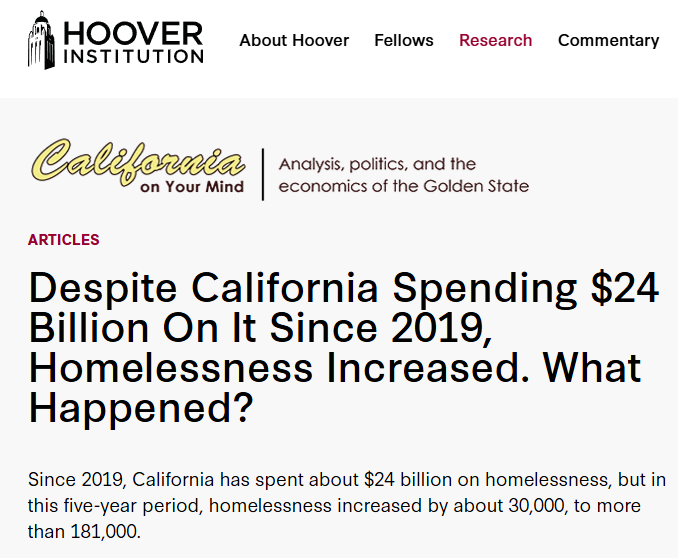
Liberrals in California spent 160k on 150k homeless people, and the end result was 30k more bums. That’s not kindness. That’s not empathy. That’s just liberals funneling taxpayer money to other liberals in the Homeless Industrial Complex.
What about the trans issue? They’d say they’ve got us there, right? Because they go on and on and on about that one, don’t they? Oh, they really care about those poor people so much… well, unless they detransition, right? Then liberals turn cruel and abusive to the exact same kids they said they care so much about, who were often pushed toward a bad idea, manipulated into embracing it, and often surgically mutilated:
Even setting that aside, there is nothing less empathetic than pushing mentally ill people to do something that causes them to kill themselves at a staggering clip. No one who genuinely cares about another human being would encourage them to go trans:

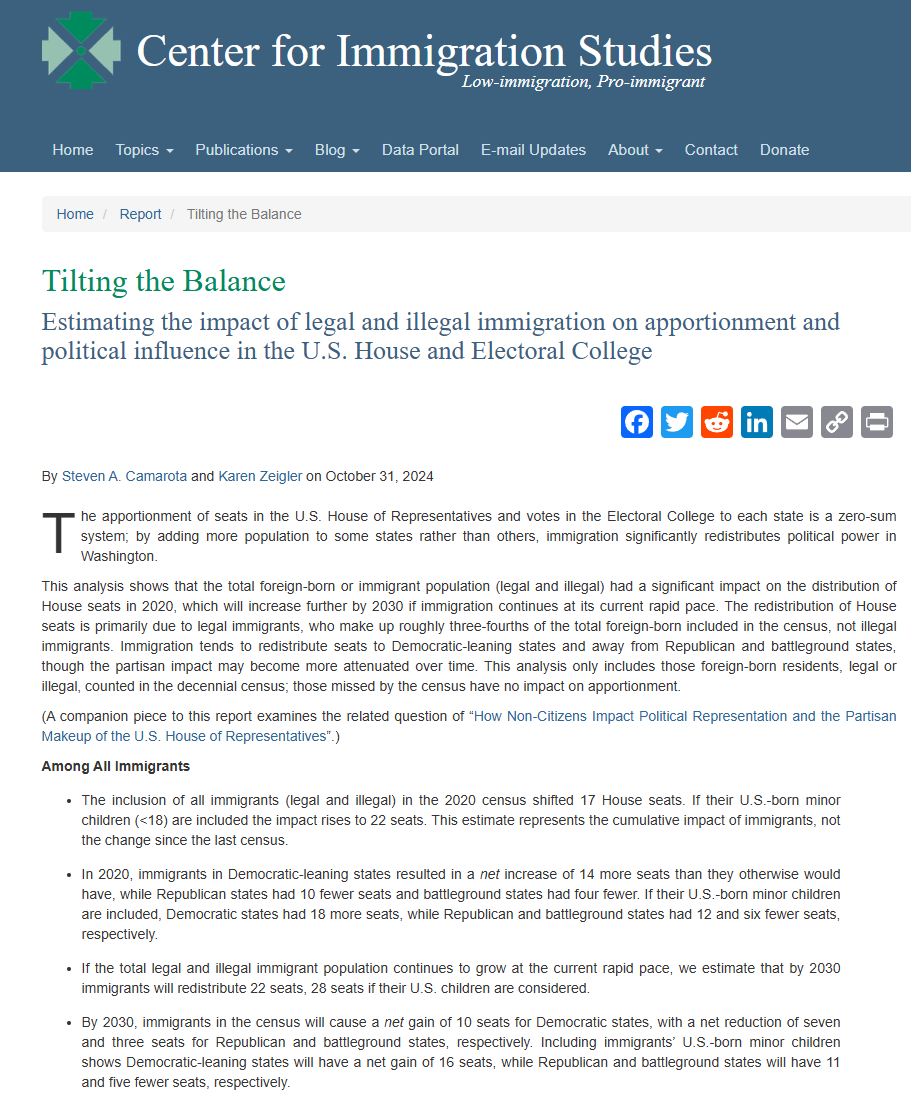
Well, what about illegal immigrants? Liberals feel all kinds of empathy for them, right? No, of course not. If illegal immigrants benefited conservatives politically, they’d be getting the Luigi Mangione treatment by now. The Left’s love of illegal immigrants 100% revolves around the political advantages they get from them:
What about USAID? Why, liberals care SOOOOOOOO MUCH about doling out money to people in need all over the world, don’t they? Certainly, that must be about empathy, right? No, of course it isn’t. It’s all about making the money you contributed to taxes into THEIR MONEY. They use it as a jobs program and to fund their agenda in America and all across the world:


Yes, liberals care a great deal about things and groups that benefit them, but who doesn’t? What’s supposed to be so empathetic about that? Tell me how empathetic they are for victims of crimes, white people who are discriminated against because of the color of their skin, or people who lose their businesses because of looting or shoplifting? They don’t care if those people live or die, but because they care a lot about getting paid, getting power, and appearing like they care to other liberals, so they want credit for being empathetic. It’s all a performance. Liberals are empathetic people the same way Tobey Maguire is really Spider-Man, or Bill Clinton is a devoted husband. It’s just a role that they play, and the longer it goes on, the easier it is for everyone to see that.
The weird, suicidal behavior Mr. Harkins is describing here is called "pathological altruism" in psychiatry. There is a very good book on it that was recommended to me by Jared Taylor. I bought it and read it but cannot remember the title of it.
The article from The NY Times is slightly incorrect, I think, when it says that Aristotle pioneered the concept "Nothing in excess" or, as it is often translated, "Moderation in all things."
I think that the original maxim came from one of a group of ancient Greeks called the Seven Sages of Greece who were each asked to submit a wise maxim to be inscribed on the Altar of Apollo at Delphi. It is the most famous of the maxims, the 2nd best known being almost as wise which said "The perfect is the enemy of the good." This 2nd maxim requires more thought but it is absolutely correct and is certainly true in our times. Fanatics/idealogues seek perfection. In so doing they become enemies of the good.
A feature of the behavior of pathological altruists is that they are not satisfied merely with excessive indulgence toward and sympathy with pathetic people. They also seem to need to hate successful, decent people.
I have a member of my family who exhibits this trait. He is a charming, handsome, likeable fellow but he has grown into a liberal fanatic. He basically is a Marxist. He would furiously deny it but in fact he is a Communist. He is a character type I call "a Communist but doesn't know it." He would have been a natural to fall in with Lenin in the Russian Revolution.
This type of liberal now seems to be the norm.
It is very difficult to talk with him about political matters because he believes that he and others like him have a monopoly on benevolent motives and those who disagree are per se full of hate and have malevolent motives. He becomes very angry when confronted with a different opinion.
So, on the rare occasions when I meet him, I usually try to stifle my own ideas and avoid provoking him by expressing disagreement.
Every once in a while, he becomes relatively lucid and on such occasions sometimes I dare to express my opinion to him. This usually does not turn out well so I do it less and less.
On one such occasion I told him:
"Hypothetically, let's presume that there's a family in which there are 2 sons.
1 of the sons is a boy scout...literally and figuratively. He does his homework. He studies. He gets a paper route. He wins a scholarship and works his way through college. When he graduates from college, he's accepted to med school. He becomes a doctor. He gets married and has 3 nice children. He drives his boys to Little League. He takes his girl to ballet lessons. He pays the mortgage on the house where he and his family live. He paints the picket fence on the weekend.
"The other son takes a different route in life. He makes the decision to start drinking and doing drugs in high school. He drops out of school where he has made deplorable grades. At age 17 he robs the 7/11. He shoots the cashier and leaves her in a wheelchair for the rest of her life. By his 30s he has been convicted of 5 felonies and spent several years in jail. He has become an alcoholic and a drug addict. He's down at the soup kitchen vomiting his guts out from last night's drinking binge.
"Your attitude is that the 2nd son is somehow morally superior to the 1st one. The doctor son in some strange way is morally responsible for all the misdeeds and bad decisions of the drug addict son. The doctor son's achievements to your way of thinking are the results of his somehow exploiting the dope addict one.
"This seems like a strange upside way of looking at things. To my mind the morally superior son is the one who went to med school, made something of himself and is acting like a good father. I can understand feeling sympathy for the foolish boy who has wrecked his life but I can't grasp why his successful brother is a bad guy and morally inferior to the failed one."
My conception of the relative virtues of the 2 hypothetical boys was deeply offensive to my relative.
That's how these people are.
And they are dangerous and their numbers are skyrocketing. The school system is dedicated to fostering their weird inverted value system.
Pathological altruists are poised to commit the kind of horrors perpetrated by Lenin and his Bolsheviks by which they slaughtered the class of people who had bred the Pushkins, the Tchaikovskies and the Tolstoys, purportedly so as to help the proletarians and poor parents.
I'm nearing 80. I don't like a lot of things about old age but I am glad that I will not be here when the proverbial guano hits the fan.
I don't think there's going to be a soft landing.
It isn't going to be pretty.
Well said, John. I haven’t read Saad’s bill yet (next up on my Audible list), but from what I understand about his argument, I think you’re both right.
There’s a great depiction of the difference between the liberal brain and conservative brain where the conservative brain’s focus is close to center (family, friends) and the liberal brain’s focus is detached from center and focused on those further away (unknown people in other countries for example). El Galo Mato has posted it a few times.
I do think the typical leftist cares (or at least she believes she cares) about those various “persecuted” or “down trodden people” which “empathy” has been hijacked by leftist politicians who ride that empathy to power while constructing a system (of which USAID is the perfect example) which allows them to argue they’re helping the “downtrodden” (which creates the leftist support for that system) while funneling a portion of the money back to them.