

Everybody wants to change things about their life, and almost everybody has a hard time making it stick.
Why?
Part of it is that you may want to change something about your life, but it’s still the way that it is for a reason. Changing that trajectory can sometimes be harder than people think. Furthermore, the longer you repeat a pattern, the more likely it is to become a habit, which makes it harder to do something different. If it’s a good habit? That’s great. If it’s a bad habit? Not so great.
So, how do you get over this and actually change things?
Well, the traditional answer is to just make a decision, decide how things are going to be, and use your willpower to make it happen! This absolutely can work, but for most of us, willpower is a limited resource. When we spend day after day grinding it out, on the verge of failing, oftentimes we give in and go back to the easier, more natural “wrong” way of doing things.
If you’ve ever tried to change something in your life and kept trying and failing, this article will be incredibly useful because it will help you break that pattern.
So, just as a starter, forgive yourself for not being perfect, read this article, and tackle that problem you’ve been struggling with in a different way.
What are the steps you need to take to make a change stick in your life?
1) Start small and expand: It’s brutally hard to go from not working out at all to working out for an hour per day five days per week or to suddenly start getting up two hours per day earlier to work on your business. Do you know what’s not brutal? Going from nothing to two 30-minute workouts with light weights per week or getting up 15 minutes early to work on a business plan for a couple of weeks.
People don’t like this kind of thing because it feels trivial to them, and they wonder how they’re ever going to make progress going so slow. However, starting small helps you build the habit of keeping promises to yourself and creates momentum. Soon, instead of lifting easier, you’ll want to move heavier weights or start thinking, “If I’m doing this much in 15 minutes, imagine what I could do with 30.” You wouldn’t even think of going from sitting on your couch to running a marathon without building up to it, so why would you think it would be different for these other important things you want to do?
2) Only commit to what you can do: There is nothing easier than saying, “I’ll start on Monday,” but then putting it off another day. Then two. Then another week. The problem is that if you do this enough, you lose faith in yourself and your ability to change.
That’s another reason why making small promises to yourself that you can ABSOLUTELY COMMIT TO KEEPING is important. Because if you promise to drink a glass of water when you wake up each morning, look at a gratitude journal each night, watch one YouTube “how to” video on something you’re learning about each day, and you do it, then you do the next thing, and the next thing. Suddenly, when you want to step it up, you will BELIEVE that you can do it and make it happen.
3) Measure it: This is one of my all-time favorite quotes because over and over again, I’ve found it’s true:
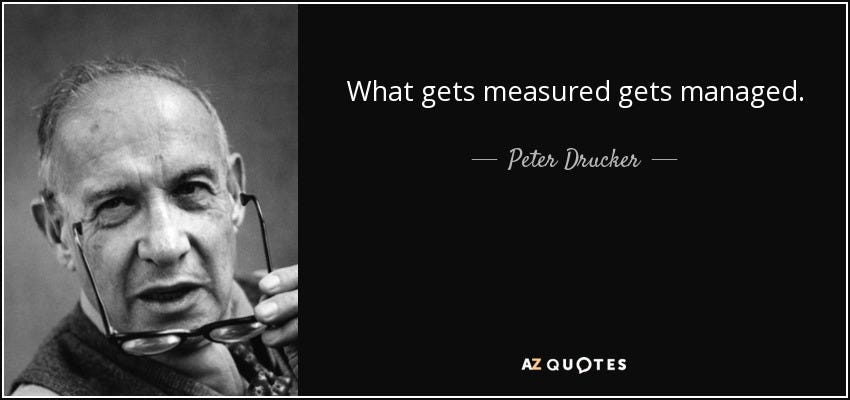
If you’re a competent, hard-working, or ambitious person, there’s just something in you that WANTS TO GET BETTER. But how do you definitively know if you’re getting better if you aren’t measuring your performance?
Once you measure your performance, you will often find yourself trying to beat your old marks, almost without thinking about it.
Let me give you a personal example: I had a serious surgery and the number of steps per day I walked dropped significantly. Then, even as I got healthier, it stayed below my previous numbers. I averaged 7k, 8k, or 9k steps per day over the course of a month, but I wasn’t back to 10,000. Then, I went on a vacation and ended up having several 15k-20k step days. When I got back, I realized I was on track to hit 10k again. Suddenly, I was inspired to get after it hard for the rest of the month, and I made it. Today? Barring injuries, I average 10k steps per day every month. It’s now the STANDARD for me, and a lot of that has to do with tracking and keeping up with my step count. If you measure what you’re trying to change, it can happen for you, too.
4) The mixed blessing of tools: Tools can be extremely helpful when you’re trying to change something. There are all sorts of trackers that help you with measuring your health. If you’re having trouble with getting off your cell phone, one of these bad boys would probably also be a big difference maker:
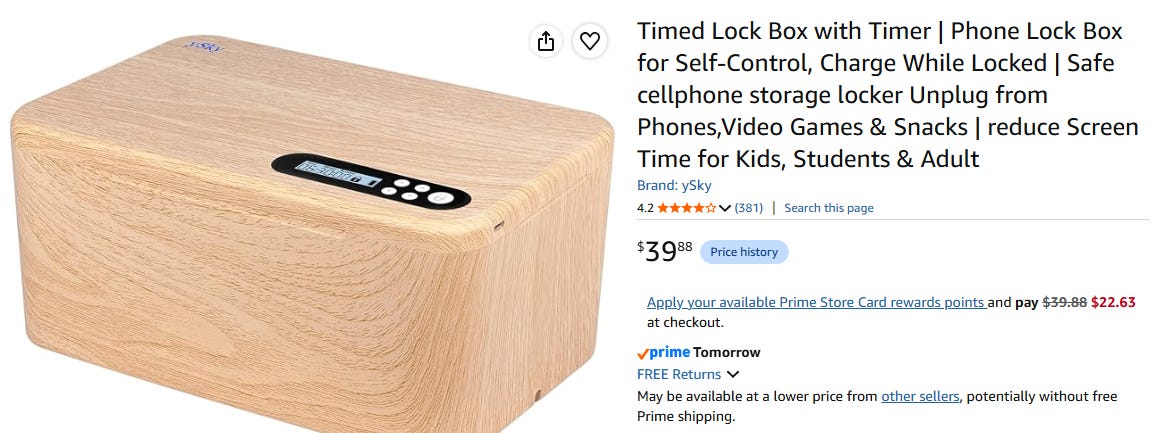
On the other hand, let’s say you want to get into biking. It’s very easy to wait until you can find some super expensive mountain bike you want for sale on Facebook Marketplace, which may or may not ever occur. WAITING ON TOOLS can easily turn into an excuse NOT TO CHANGE. If a tool can help you change, and you can afford it and get it, great. USE IT, but don’t let it turn into a brake on making your life better.
5) Structure your environment in a way that favors you: If your favorite food is Krispy Kreme donuts, you binge on them every week, and you drive by their store on the way home from work each night, DRIVE A DIFFERENT ROUTE home. If you only want to drink on the weekends and constantly get tempted to partake during the week, don’t keep beer in your fridge all week. Get it on Saturday. If you want to get up 30 minutes early and you keep hitting the snooze button, get 3 alarm clocks and put them in different places around the room so that you HAVE TO get out of bed. Create an environment that increases your odds of success and, ideally, makes it easier to change than not to change.
6) Make it part of your daily routine: When I enter my office, there’s a set of very basic exercises I do (Indian clubs, massage gun work, neck stretches, etc.). When I get in the car and go somewhere that isn’t extremely close, I do a different set of small things for my health (jaw stretches, breathing exercises, finger exercises, etc.). When I get up, I do certain things. When I go to bed? There are other things I do. My supplements sit on my kitchen table so that when I eat, I am reminded to take them with my food.
If you weave the changes you want to make into regular activities in your life, you are more likely to do them consistently. Maybe you don’t turn on the TV at night until you finish your homework or only go home for the night if you’ve at least spoken to 3 strangers SOMEWHERE to help get over your shyness. The more the change you want becomes a natural part of your routine, the more likely it is to stick.
7) Accountability: I lift weights on my own every single week, but I also have a trainer. I have been doing Muay Thai for a long time, and I could probably practice what I already know and do fairly well with it. Yet, I still have a very good coach. I also have a life coach I have talked to once per quarter for like a decade, and to be perfectly honest, I don’t need her to coach me on anything. So, why do I do all those things? Because…
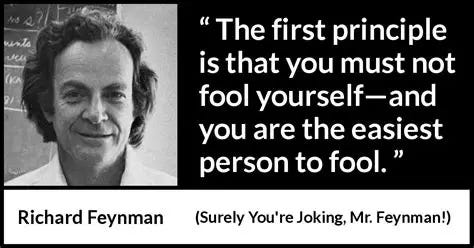
When you’re sleepy, tired, or don’t feel like doing something, there’s nothing easier than to come up with an excuse not to do it. It’s even easier if you’re smart, because smart people can come up with even better-sounding bullsh*t.
That’s why we all need accountability. We need someone who gives us a reason to show up when we said we’d show up, live up to our word, and make sure we’re not fooling ourselves about how hard we’re working.
If you have any pride (and some of us, myself included, probably have too much of it), you feel a twinge of SHAME and EMBARRASSMENT if another person sees you go back on your word or fall short because of a lack of effort. That can be the difference between success and failure if you’re trying to change something in your life. Take full advantage of that at every opportunity to lock in those changes you want.
So true. Now, do golf 🤣
This is how I changed my life after my mental breakdown. My psychiatrist had me work on one thing at a time and at first, I was accountable to him as I saw him weekly. When started improving, my appointments were monthly and then every 3 months. I was still accountable to him, but he had me be accountable to another. Sometimes it was my wife, sometimes my mother, and sometimes a friend. It has taken 30 years to get where I am at today, and I am still improving myself.
After I had my stroke almost 30 years ago, I used this method for rehab. I saw a physical therapist, speech therapist and an occupational therapist. I was only seeing each twice a week. So I made a schedule for home to work on the things I needed to. I had all the time in the world as I was on medical leave. I started with 15 minutes a day for each of the three. After a couple of weeks, I saw enough improvement that I decided to try 15 minutes twice a day. The improvement continued. After several weeks I, without really thinking about it expanded to 1 hour sessions for the three areas, twice a day. It became my occupation. My therapists were amazed at how fast I progressed. My response was rehab was my full time job until I was able to return to work. That happened after two years.
There were times I did not want to do the work, but I had a set daily schedule and I reached a point where I just followed the schedule no matter how I was feeling. For me, it was worse to do nothing when I knew I should be working out. Shortly after I started a session, I forgot that I did not feel like doing it.
I also have a few physical issues with my back, knees, hips, and shoulders. I wake up every morning with some level of pain. It would be easy to just stay in bed. I get up and start moving, no matter how painful. After a while, the muscles start relaxing and the pain eases to the point where I hardly notice it. I can still do about 90% of the things I have done in the past.
I know several people that just gave up when they were in their 40s or 50s. They look frail now they are in their 60s. I had a full workup recently that involved 3 days having a variety of tests done. The result was I am in the 80th percentile for my age group in all physical and mental aspects.
Change is hard but it greatly increases the quality of life.