

So, I just got back from Tokyo last Friday, which was a city I’ve wanted to go to for a very long time. Tokyo is the largest city in the world. It is 841 square miles, and counting the metropolitan area, it clocks in at 41 million people. You can really feel that at times when you’re packed in like a sardine on the train or walking by 10 restaurants in a row that seem absolutely stuffed with human beings.
All in all, it was a fascinating experience because the Japanese have a very different way of doing things than Americans. They’re a neat, orderly, polite people everywhere except the sidewalks and streets, where you’ll have relatively small alleys with cars, people, bikes, and motorcycles all sharing the same space, with everyone but the cars going in either direction. Somehow, they make that work.
It’s also extremely safe. It’s not unusual for children as young as 6-8 to be walking around or traveling on the subway by themselves. In a big American city, if you go down a long, dark alley, you might expect to see a homeless guy shooting up or a criminal waiting to rob you. When you do the same thing in Tokyo, you expect to see two guys dressed like K-pop singers pass you or cute girls sitting on a stoop eating noodles. Incidentally, K-pop and, believe it or not, Goth aesthetics seemed to be very popular with young Japanese people.
I could go on and on about Tokyo. The food is fantastic and very different (I ate things like raw squid, eel, sea urchin, and whale while I was there):

They have Buddhist temples older than our country in the middle of the city. The Japanese are a thin people, like 1930s Americans, thin. Why? Best guess? Good genetics, a lot of walking, and significantly smaller food portions than in the US. Tokyo is also surprisingly cheap. I’d guess about “average” for an American city. Maybe lower. I could go on and on about Tokyo, but instead, enjoy the 10-out-of-10 “Japanness” of this picture:

Now, you might think, “John is an experienced traveler. He probably knew exactly what to do in every situation in Japan.”
Hate to tell you this, but not even close.
Despite doing a good bit of prep for this trip, I got lost in the train stations three times, it took me 15 minutes to figure out how the shower worked (I never did quite figure out all the options on the toilet in my room), and I had to go to the desk of my hotel and get help because I couldn’t figure out how to TURN ON THE LIGHTS (they use a card).
The first time I tried to take a cab, my cab driver didn’t understand the name of my hotel in English, so I had to figure out how to translate it, along with the address in Japanese on the fly (thank you ChatGPT). At one point, I’m sure I annoyed the hell out of a Ramen shop owner as I tried to put a 10,000-yen bill into a machine over and over without realizing that it maxxed out on 1,000-yen bills. Another time, I put the bill in the wrong slot and JAMMED the payment machine until someone came over to fix it (thank goodness there was no one waiting on me). On top of all that, I learned from talking to another American on a tour that I could have taken a direct flight from DC to Tokyo, which would have been a better, faster option that went to a closer airport at about the same price.
Paradoxically, this is one of the many reasons I love traveling so much. You get to see new ways of doing things, and there is a learning curve.
Without experiencing this in a variety of different ways, you can’t get better as a human being. To learn anything new, you have to start from zero, be comically bad at it, and build. If you’re not willing to be embarrassed, confused, and ask some foolish questions, you will never grow as a human being.
I could give you unlimited examples of this from my own life.
Did you know at 16, I flunked the driving portion of my driver’s test not once, but TWICE? Once, I went the wrong way down a street, and another time, I backed into a car. Yes, really. When I was a complete newbie around guns and got some professional handgun training, I started to unintentionally turn toward people multiple times while still holding a gun, and the instructors had to stop me. After surgery last year, I was not allowed to lift weights for 9 months. I lost more than 10 pounds of muscle, and when I got back in the gym, I went from way, way above average to very average. After several months of working on it, I’m still at only about 90-95% of where I was at, although I should be surpassing it again soon.
This whole column so far has revolved around me, but this is actually the rule, not the exception. To get smart, you have to be willing to feel stupid.
There’s a famous story about this that has floated around for decades, although no one seems to have been able to confirm whether it’s real or some mixture of the truth and anecdote:
Tom Watson Jr., CEO of IBM between 1956 and 1971, was a key figure in the information revolution. Watson repeatedly demonstrated his abilities as a leader, never more so than in our first short story.
A young executive had made some bad decisions that cost the company several million dollars. He was summoned to Watson’s office, fully expecting to be dismissed. As he entered the office, the young executive said, “I suppose after that set of mistakes you will want to fire me.”
Watson was said to have replied, “Not at all, young man, we have just spent a couple of million dollars educating you.”
Whether this story is true or not, it really does work this way in the real world.
For example, I know someone who has remodeled and rented out more than a dozen homes, and I’ve heard them bitterly berate themselves for the mistakes they’ve made along the way. Meanwhile, because of all those mistakes they made over time, they’re also phenomenally good at remodeling homes because they know how to sidestep pitfall after pitfall that they’ve hit before.
Even the best athletes in the world, the legends that everyone talks about as the best that ever lived, they’ve all had coaches. Usually, multiple coaches. Why? Because even the best of the best need to keep learning, to keep correcting their behavior, and they need to keep getting better.
Along similar lines, time after time, you’ll find that the people who seem to succeed at turning a small business into a big one are the people who learned the hard way how to do everything themselves, then delegated out those functions and moved into more of a management role. It was because they started out at the bottom that they were able to make it to the top.
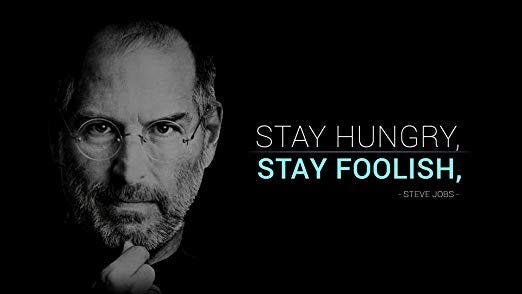
The best and wisest people in everything think this way. They’re willing to make mistakes, look foolish, and ask the questions needed to learn the correct way to do things. The people who are too proud, too comfortable, and too afraid of looking dumb will stagnate, struggle, and never be good at anything. So don’t worry about feeling stupid. It’s the only way to ever really get smart.
Great piece John. Japan and South Korea are on my bucket list.
“So don’t worry about feeling stupid. It’s the only way to ever really get smart.”
I am a recovering IT executive. Early in my career in the early 80s we used a software development methodology that we called the “waterfall method”. We identify the change stakeholder and collect requirements. The requirements become design specifications that we use to develop the system. Then we test the system based on the requirements. The last step is implementation.
This generally resulted in systems that were not designed well enough.
The remedy was “rapid development” methodologies where changes were done in smaller “releases” within a constant improvement loop. Within this change process is a concept called “estimate to completion”. ETC is basically connecting the change project to the stated goals and objectives and at each major milestone (each release) ask “what is the estimate to completion?” With that information each milestone includes a “go” vs “no go” decision.
This latter methodology is the current standard. In practice in the business world it facilitates the decision process to take bold moves without betting the farm. All the assumptions are made upfront to confirm the feasibility; but, if later lessons are learned that prove a lack of feasibility, the project should be scrapped so that good money is not wasted on bad outcomes.
The people with their anuses puckered up with risk aversion… the fear of making mistakes or failing… they love to tag the people that take these bold moves as losers if the project is eventually canceled. However, they also rarely acknowledge the success of anyone else making bold moves… they will just call it luck while they make excuses for why they did not support the project in the first place.
Getting this back to Democrat vs Republican, in general there are talkers and there are doers. Democrats tend to be talkers… and doing a lot of talking to deflect from having to actually do anything because doing something risks making mistakes and failing. Republicans tend to be doers… and often lack the verbal skills to do much talking while they are doing.
Lastly, there is a point about shared goals. I think because Japan is very culturally homogenous the people as stakeholders to all public policy are more apt to share the goals of the project. That facilitates decision making in a democracy. In the US we have little acceptance of there being a unified culture, and we have a mess of multiculturalism. NIMBYism is rife in the US. In my liberal college town every peripheral development project has been voted down by the electorate… even as there is a lack of property and rents have skyrocketed to some of the highest in the state. These voters pay lip-service to the plight of homeless and people having their budgets slammed by the too high cost of housing. But there is a low feeling of community belonging and the related care that would come from it. It is a bunch of strangers living among themselves and each man for himself. Contrast that to Japan where the voter would more likely feel a kinship connection with the other community members.
When you ad up the prevalence of people that talk and don’t do with a population of NIMBY stakeholders, that explains why states like California cannot build a bullet train and cannot rebuild Pacific Palisades. And when you give power to someone that makes decisions, that is why Trump has secured peace in the Middle East.
Making mistakes certainly is a path, and it's rarely a comfortable one, is it? As I age, I do attempt new projects but never with the sort of "blind confidence" that I had in my youth. I sometimes feel stupid because I made a mistake and curse myself because I have to fix my mistake that I feel like I should have got right the first time. It's frustrating and chisels down my self-confidence, but eventually I just chalk it up to: 1) the older you get, the more you realize how much you don't know, and 2) live and learn. Thanks for posting this essay, John. I've been an admirer of Japan for a long time based on the quality and reliability of the cars they build...